

Why Western Slope soils move so much
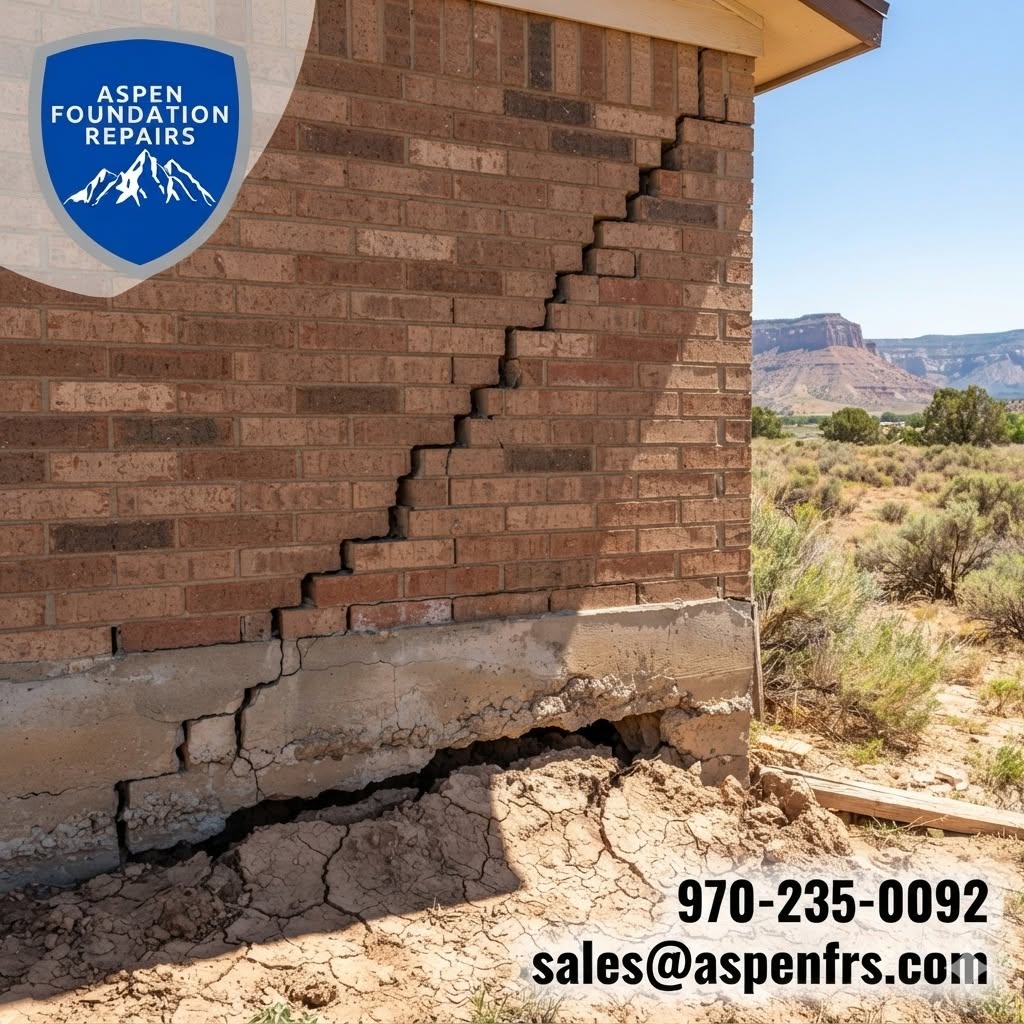
Much of Mesa, Garfield, Pitkin, and Eagle county sits on expansive clay and Mancos shale. Those soils swell when they get wet and shrink hard when they dry out, and that seasonal cycle is what lifts, drops, and cracks foundations here.
Managing water is the whole game: gutters, grading, and buried discharge lines keep moisture content steady so the soil under your footing stops moving.
How to read a foundation crack
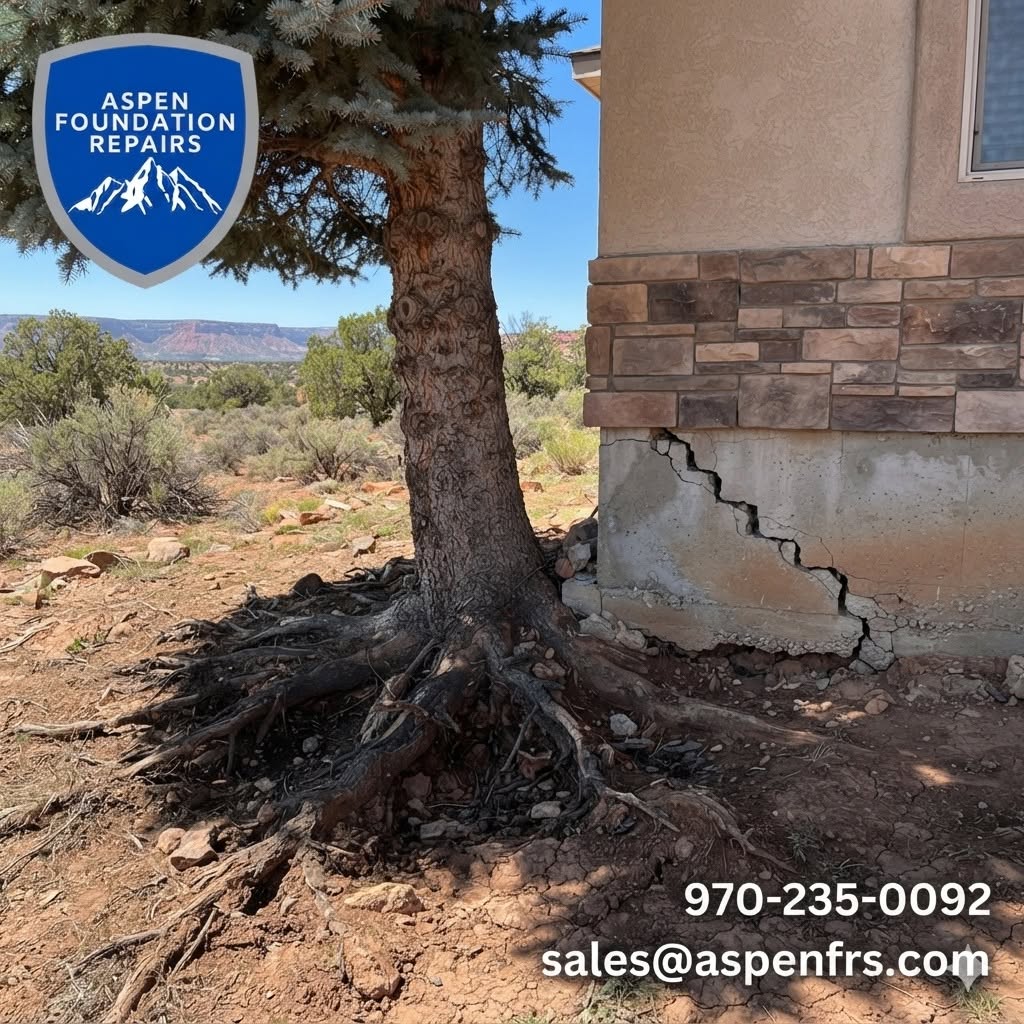
- Hairline vertical cracks are usually shrinkage from curing concrete
- Diagonal cracks from window and door corners point to differential settlement
- Horizontal cracks with inward bowing mean lateral soil pressure — get it inspected
- Stair-step cracking in brick or block follows a failing footing
- Any crack that leaks water needs sealing plus a drainage fix, not just patching
Ready to put your home back on solid ground?
Free on-site inspection, written fixed price, and warrantied work by our own crews.
Spring runoff is the most common cause of a wet basement
When snowmelt saturates the ground faster than it can drain, hydrostatic pressure pushes water through cold joints, form-tie holes, and cracks. Interior drainage plus a properly discharged sump handles the water that reaches the wall; exterior sealing and French drains keep it from getting there.
The fix that lasts almost always combines the two — and it starts with figuring out where the water is coming from.
What foundation repair costs in Western Colorado
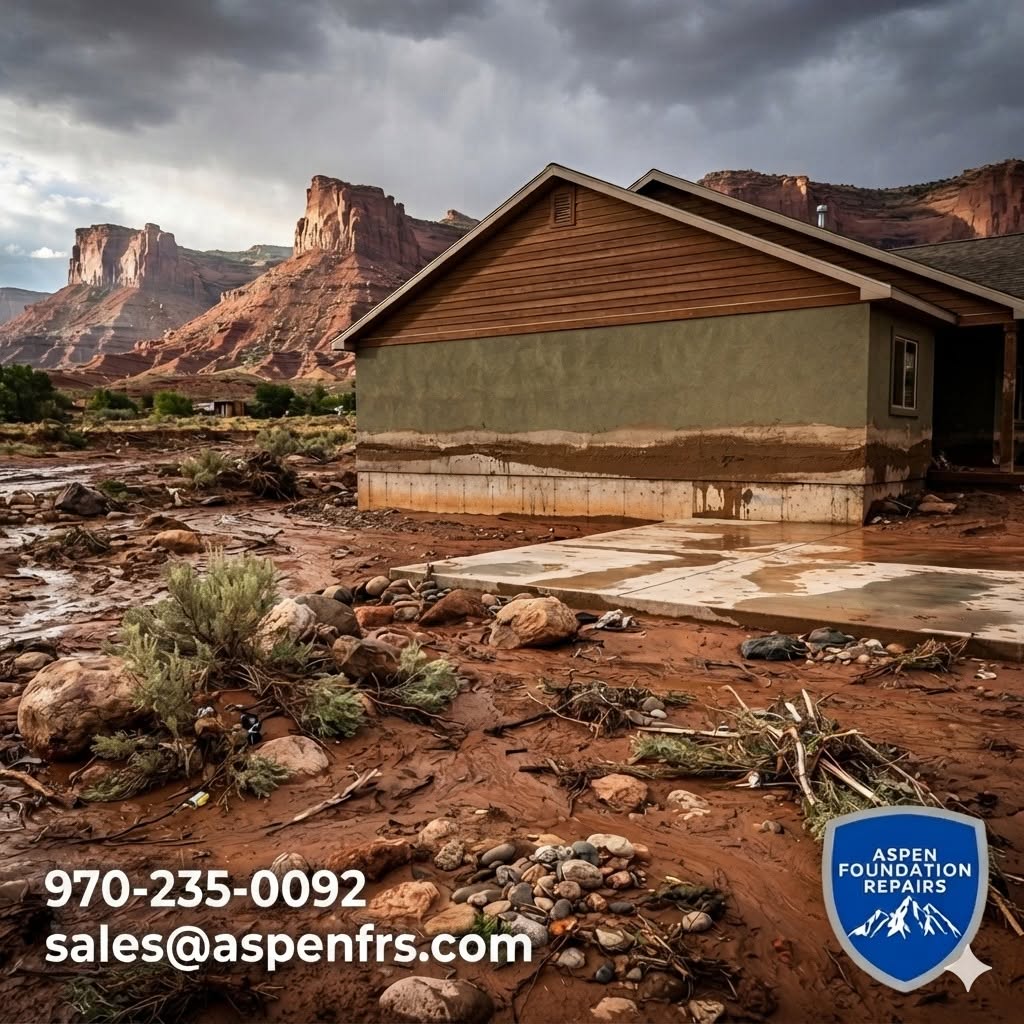
Cost tracks the fix, not the crack. Sealing a single crack is a few hundred dollars; a pier system, interior drainage, or a full foundation replacement is priced by the linear foot and the depth to competent soil.
We inspect for free and hand you a written, fixed price before any work is scheduled, with financing available on practically any job.