

Licensed & Insured — Colorado
40+ YrsReviews
Side-by-side illustration of dry cracked bentonite clay in summer and saturated soil pressing on a foundation wall in autumn

Blog

The Monsoon Fall Rains: What They Mean for Your Western Colorado Foundation

Late summer and early autumn bring sudden, heavy downpours across the Western Slope and Roaring Fork Valley. Those rains hit soil that has spent months shrinking and cracking in the heat — and when bentonite clay rehydrates, it swells with enough force to crack, bow, and shift a foundation. Knowing the warning signs and controlling where water goes is what keeps a storm from becoming structural damage.

Six Sigma Yellow Belt CertifiedSix Sigma Yellow Belt Certified

The science of Western Colorado soils: bentonite clay

To understand how monsoon rains affect your foundation, start with what lies beneath your home. Much of the Western Slope sits on expansive soil heavily laced with bentonite clay, and clay behaves like a dense sponge.

During hot, dry summer weeks the clay shrinks and cracks, pulling away from your foundation and leaving voids under footings. When sudden heavy rain arrives, that dry clay absorbs water fast and expands with immense force.

The rapid cycle of shrinking and swelling creates hydrostatic pressure — a steady push against your foundation walls that leads to cracking, bowing, and shifting.
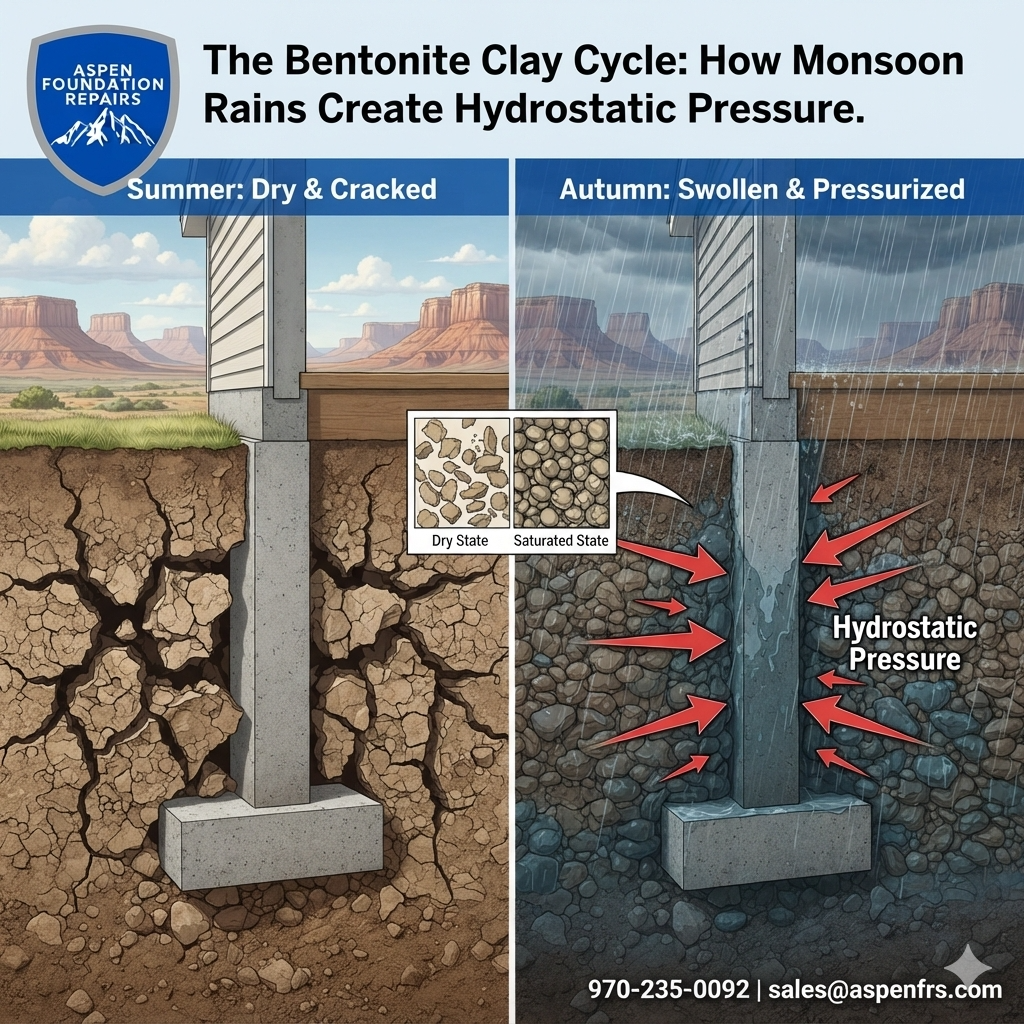
Illustration comparing dry cracked summer soil with saturated autumn soil generating hydrostatic pressure on a footing

Key takeaways

  • Much of Western Colorado sits on expansive soil laced with bentonite clay
  • Dry summer clay shrinks and cracks, then swells hard when monsoon rain arrives
  • That shrink-swell cycle creates hydrostatic pressure against foundation walls
  • You can't control the weather, but gutters, downspouts, and grading control the water

Red flags: signs your foundation is reacting to the rain

Walk your property during and after a major autumn storm. These are the warning signs our inspectors see most often on Western Slope homes:

  • Interior drywall cracks — especially diagonal cracks running from window and door corners
  • Sticking doors and windows as shifting soil warps the framing
  • Basement or crawl space moisture: damp spots, standing water, or a musty odor
  • Efflorescence — white, powdery residue on concrete where water is seeping through
  • Exterior stair-step cracking that zigzags along mortar lines in brick or block
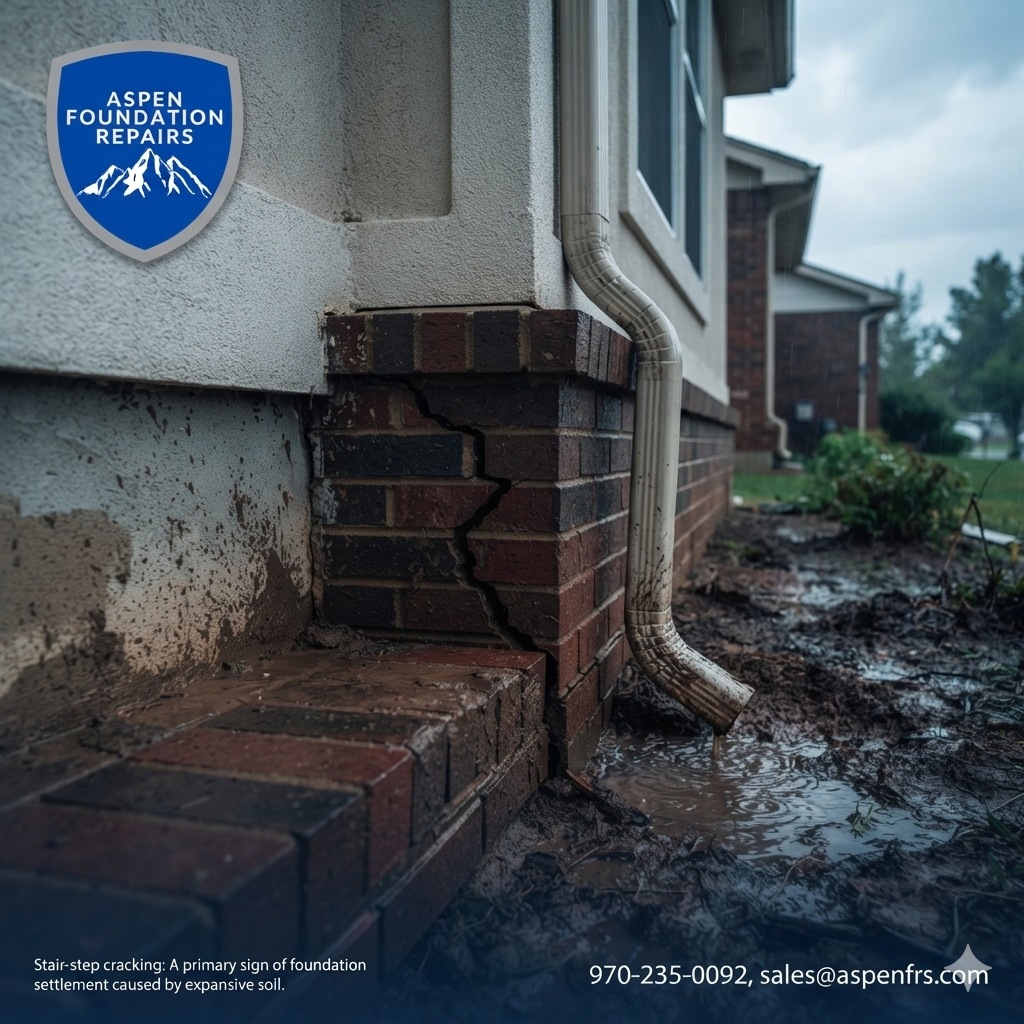
Stair-step cracking in exterior brick beside a downspout discharging next to the foundation

Ready to put your home back on solid ground?

Free on-site inspection, written fixed price, and warrantied work by our own crews.

Proactive steps to protect your home this autumn

You cannot control the weather, but you can control how water moves around your property. These four measures do more to protect a foundation here than anything else a homeowner can do:

  • Clean and clear gutters so they never overflow next to your basement walls
  • Extend downspouts to discharge 5 to 10 feet beyond the foundation perimeter
  • Check grading — the ground should drop about 6 inches over the first 10 feet
  • Seal cracks in driveways, sidewalks, and patios so water can't pool underneath
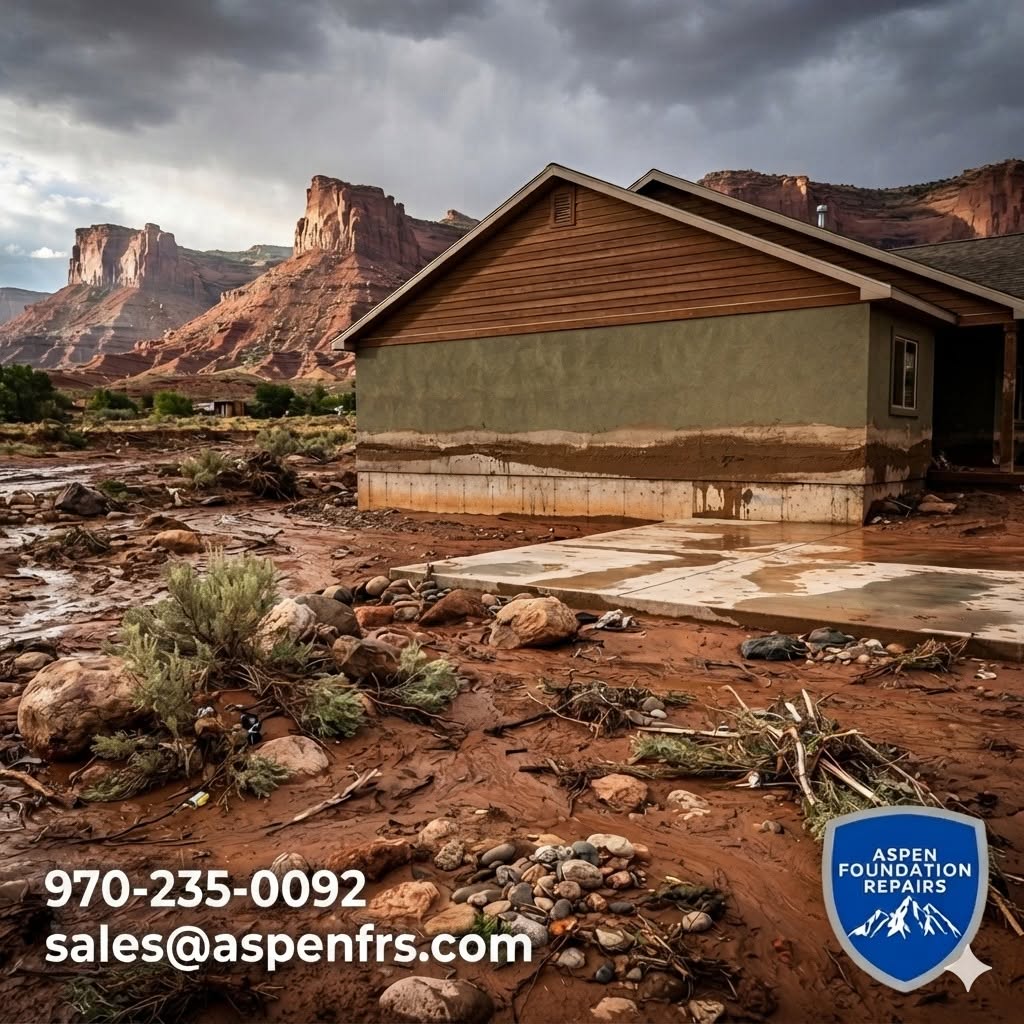
Storm runoff pooling against a home's foundation after a heavy autumn downpour

Partner with Aspen Foundation Repairs

If you suspect the seasonal rains have already taken a toll on your home, don't wait for the winter freeze to make it worse. Small cracks today easily turn into costly structural failures tomorrow — freeze-thaw cycles widen every path water has already found.

Our local team understands Western Colorado's geology and weather patterns. We provide honest evaluations and permanent, engineered solutions — piering, drainage, and waterproofing — to keep your home stable for generations.
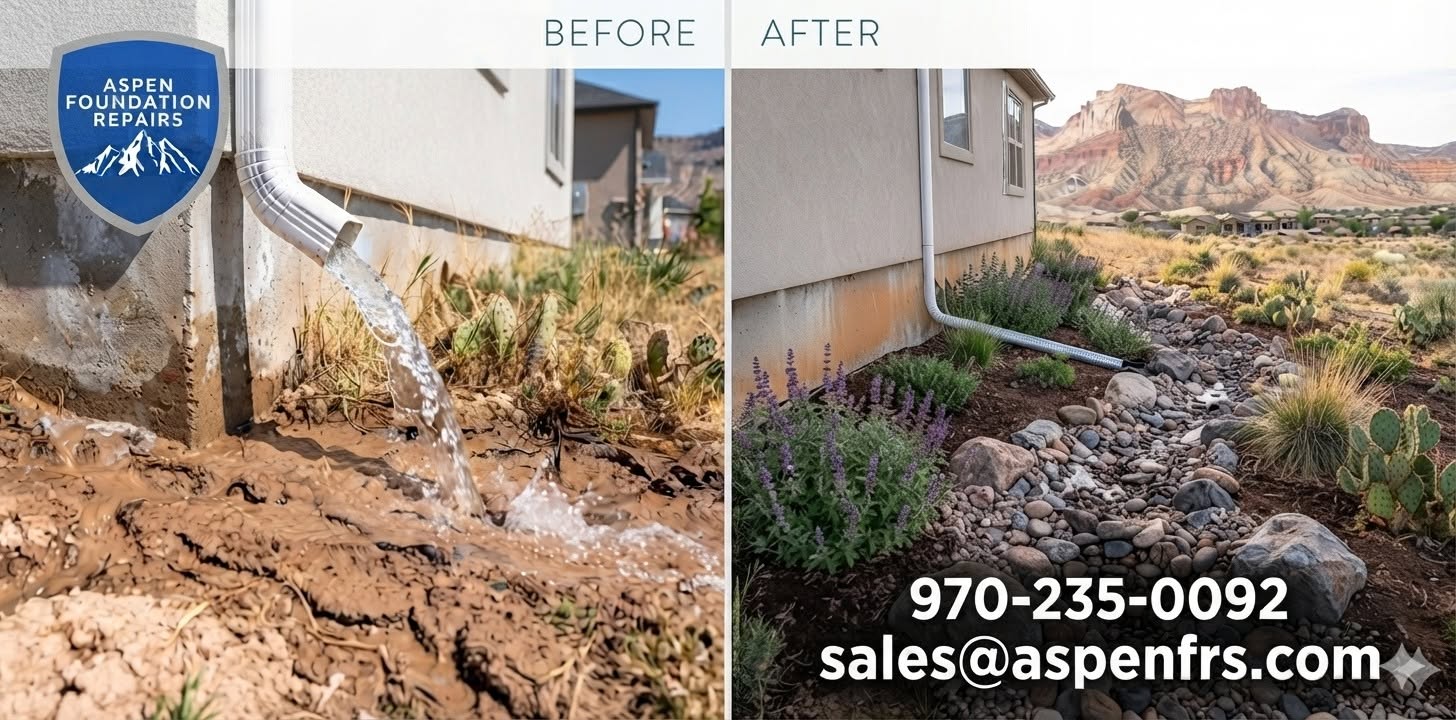
Seepage staining on a basement wall after heavy rain

Cracks, settling, or water in the basement? Don't wait.

1-970-235-0092

Frequently Asked Questions

A new crack appeared after a heavy rain — is that an emergency?

A hairline vertical crack usually isn't, but a diagonal crack from a window corner, a horizontal crack with inward bowing, or stair-step cracking in brick all point to soil movement or lateral pressure and should be inspected before winter.

How far away should my downspouts discharge?

At least 5 to 10 feet from the foundation. Buried discharge lines that daylight downhill are the most reliable option on lots where splash blocks get moved or the grade is tight.

Does waterproofing stop clay pressure by itself?

Waterproofing keeps water out of the basement, but the pressure comes from soil moisture swings. The lasting fix pairs drainage that stabilizes moisture content with structural repair — piers or wall anchors — where movement has already occurred.

When is the best time to have a foundation inspected here?

Fall, right after the monsoon rains and before the ground freezes. Problems are easiest to see while the soil is wet, and repairs are simpler before frost depth sets in.

Free Estimate

Get Your Free Foundation Estimate

Tell us what you're seeing and we'll schedule an on-site inspection with a written scope and fixed price. No cost, no obligation.

1-970-235-0092

732 Buckhorn Dr Unit B, Rifle, CO 81650 · Mon–Fri 8:00am – 4:00pm

Or call 1-970-235-0092 — no cost, no obligation.