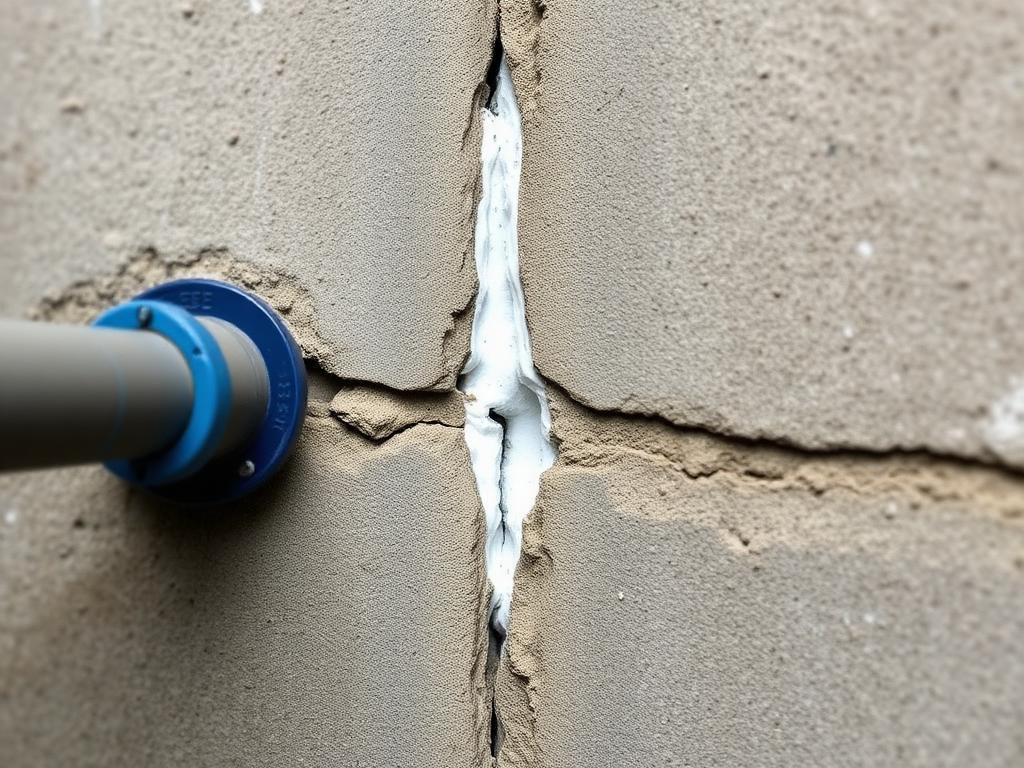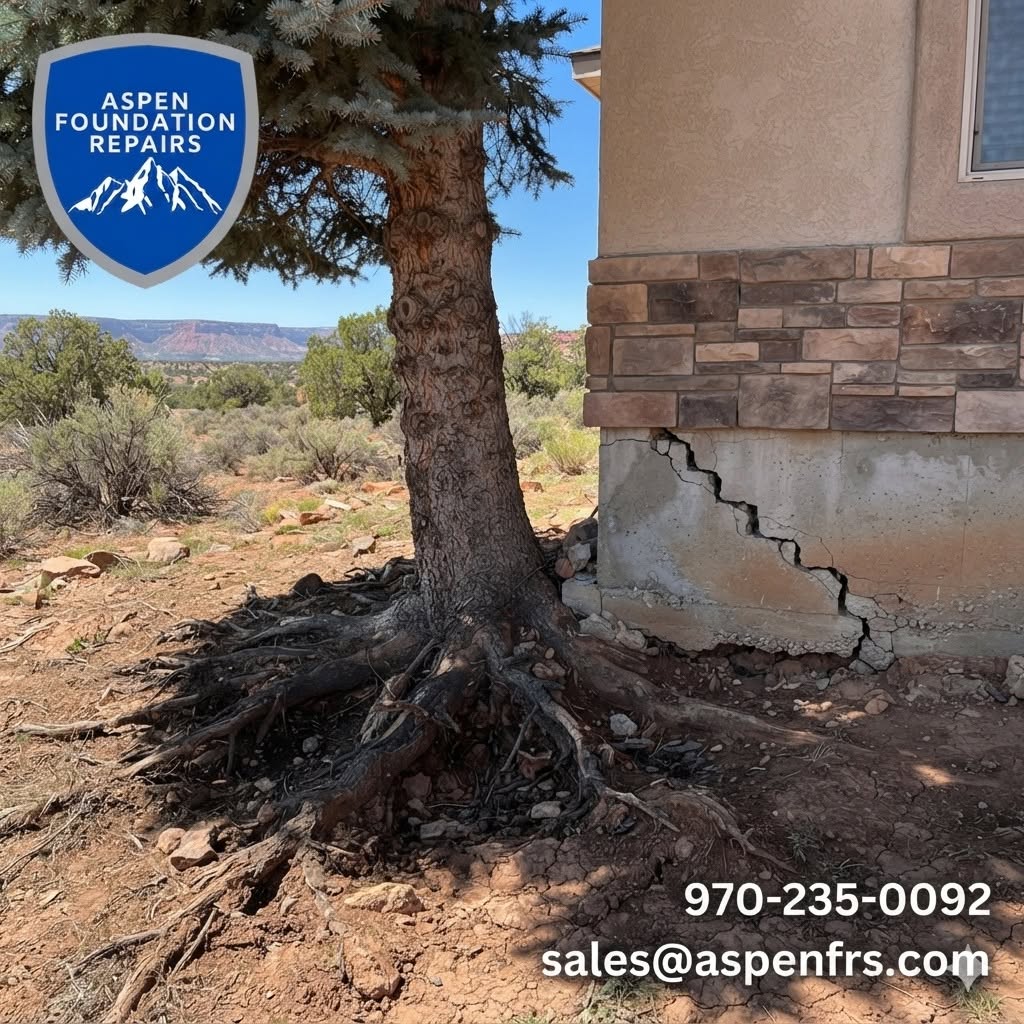

What we level
- Driveways and aprons
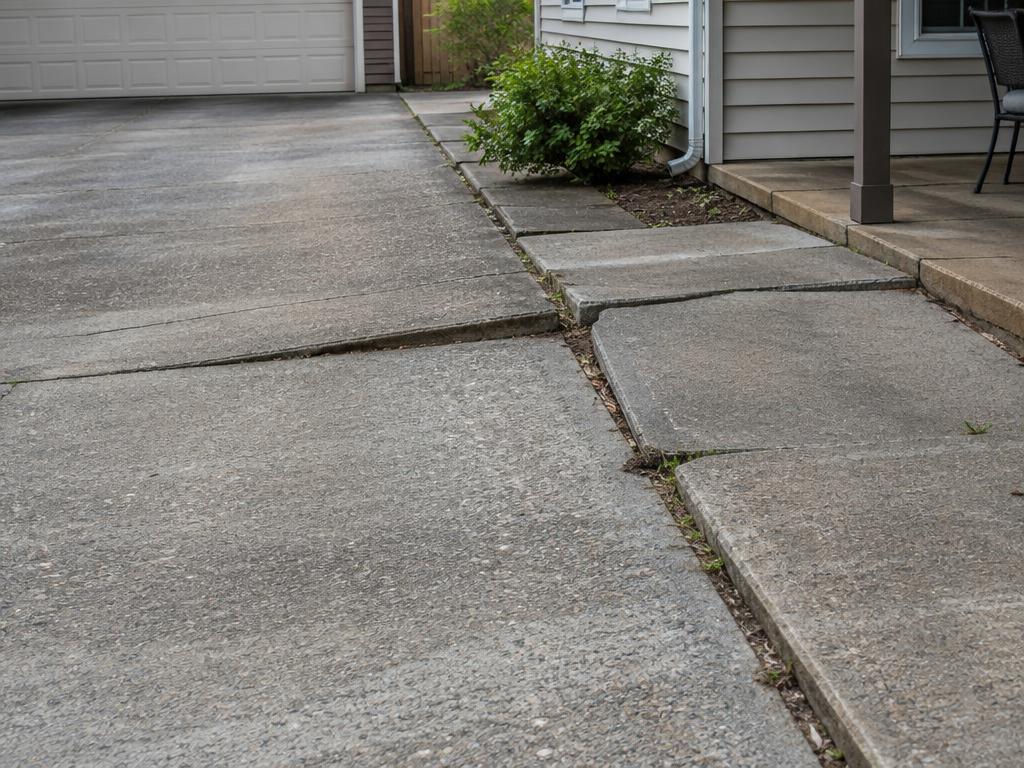
- Sidewalks and walkways
- Patios and pool decks
- Garage and basement slabs
- Steps and stoops
- Settled interior floors
Key takeaways
- Concrete leveling lifts sunken slabs by injecting expanding polyurethane foam through small ports in the concrete.
- Driveways and aprons
- Sidewalks and walkways
- Patios and pool decks
- Polyurethane foam is far lighter than a cement slurry, so it does not add load to the soil that failed in the first place.
- Free on-site inspection, written fixed price, and warrantied installation by our own crews.
Why foam instead of mudjacking
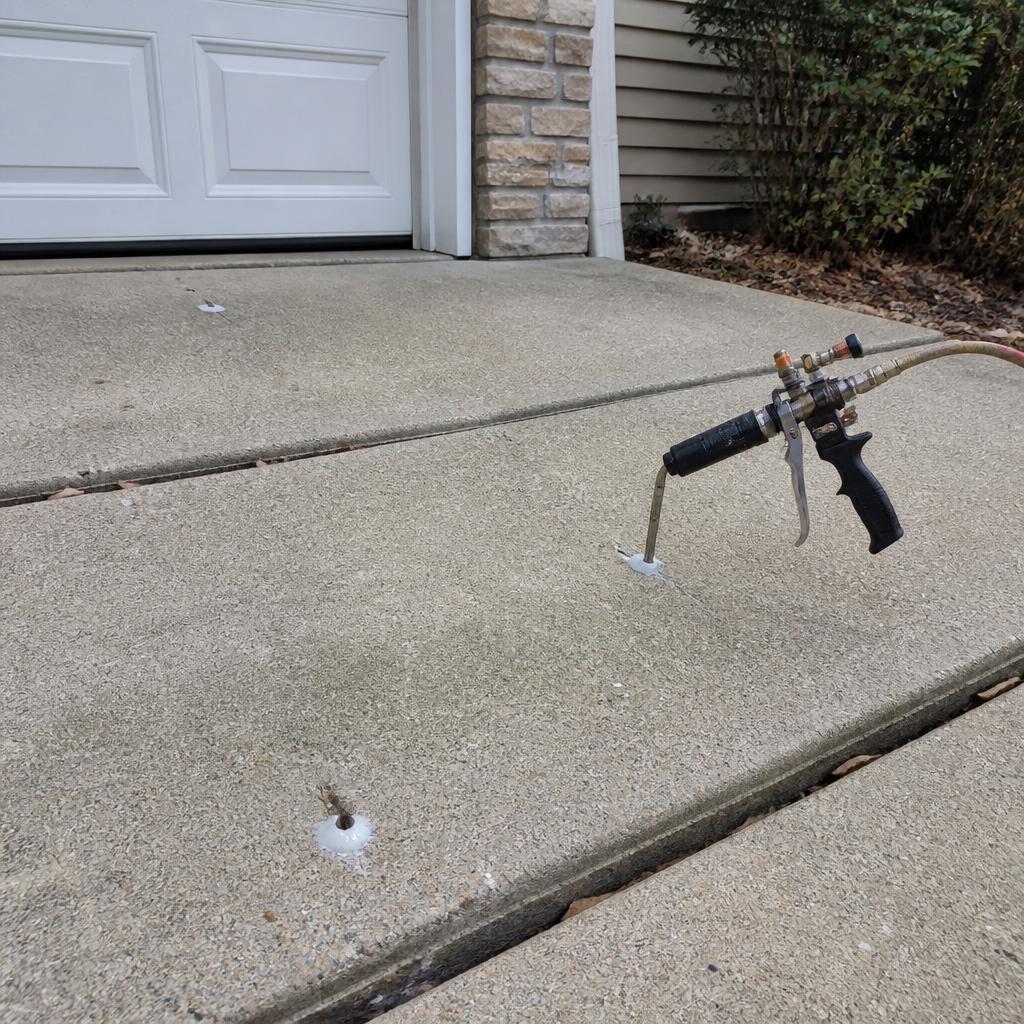
Polyurethane foam is far lighter than a cement slurry, so it does not add load to the soil that failed in the first place. The injection holes are dime-sized, the foam cures in minutes, and the slab is back in service the same day.
Foam is also waterproof, so it will not wash out under a driveway that sheds snowmelt every spring.
Ready to put your home back on solid ground?
Free on-site inspection, written fixed price, and warrantied work by our own crews.
Signs a slab needs leveling
- Trip hazards where sidewalk sections have dropped
- A driveway apron that has settled away from the garage
- Water pooling against the house instead of draining away
- Doors and gates that drag on a settled patio
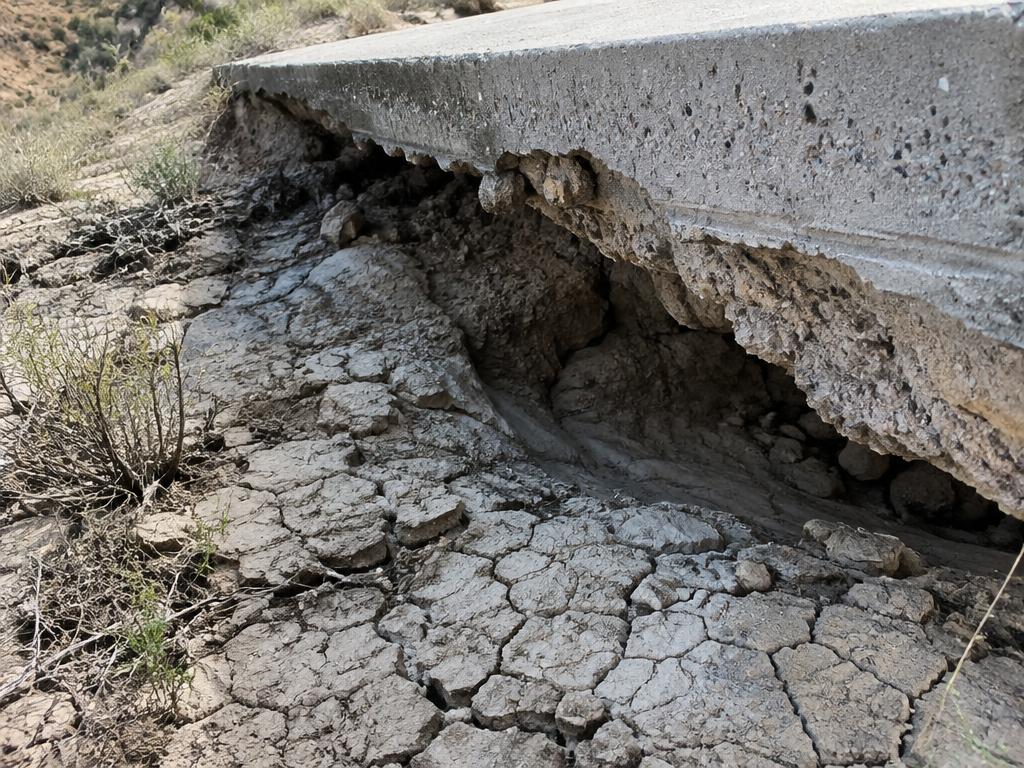
- Hollow-sounding concrete over a washed-out void
- Cracked slabs that rock underfoot
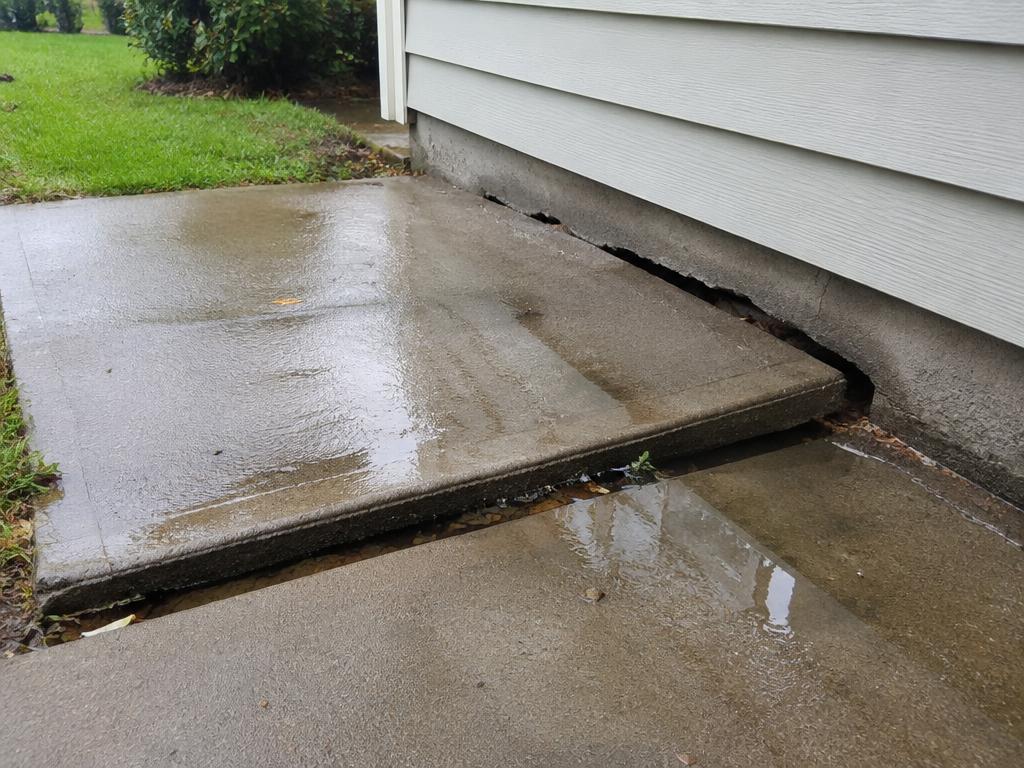
Why slabs settle on the Western Slope
Most settlement we see across Rifle, Glenwood Springs, Carbondale, Grand Junction, Aspen, Basalt and Vail traces back to water. Snowmelt and roof runoff wash fines out from under a slab, poorly compacted backfill consolidates over time, and freeze-thaw cycling opens voids the concrete then bridges until it cracks.
Because of that, we look at grading, downspouts, and drainage during the estimate — lifting a slab without fixing the water only resets the clock.