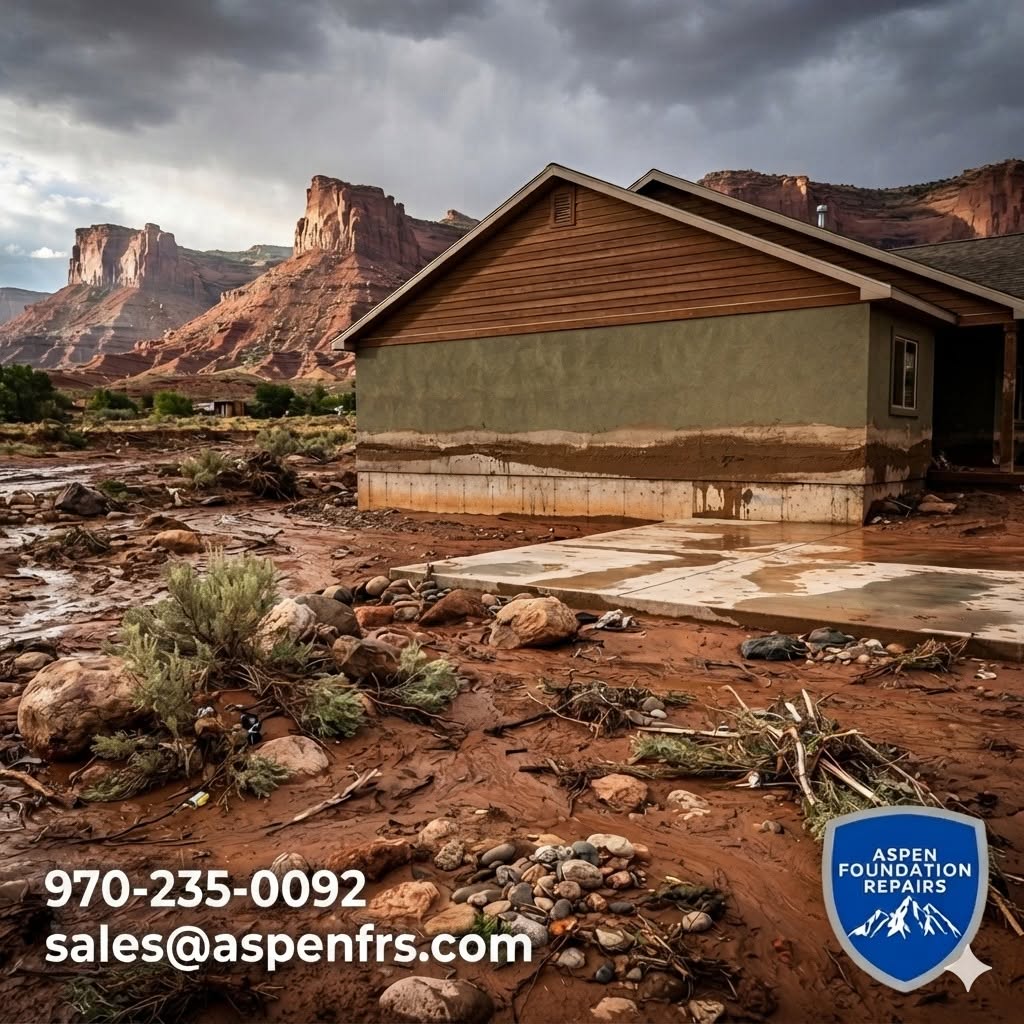

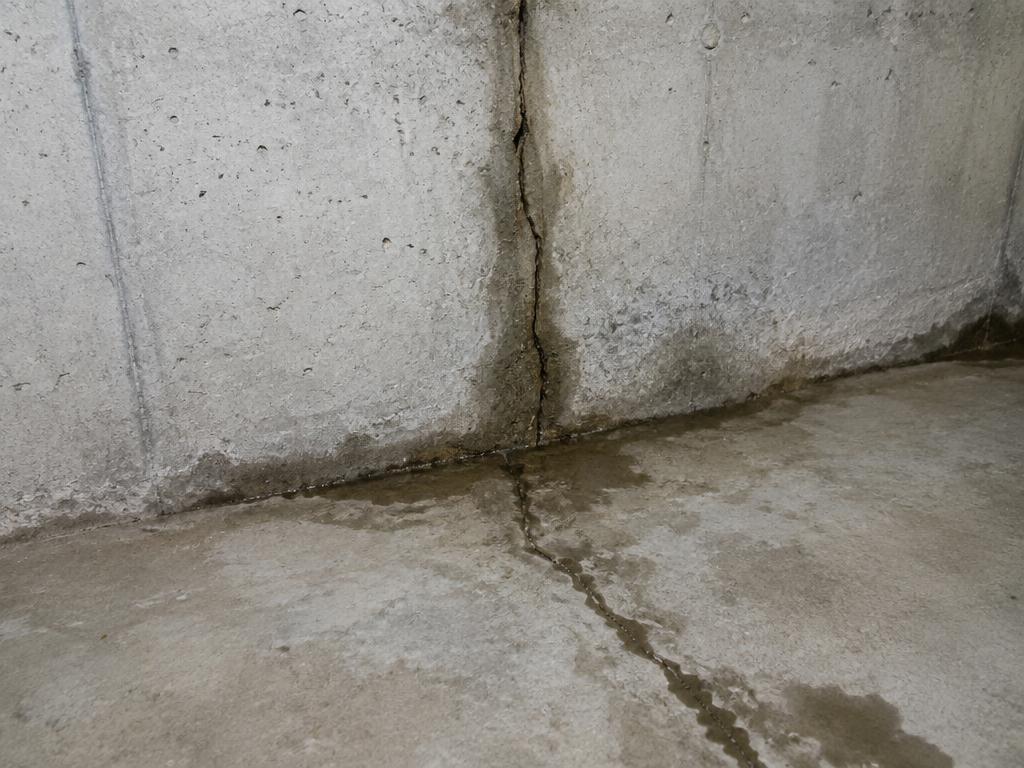
Signs of a cracked basement wall or floor
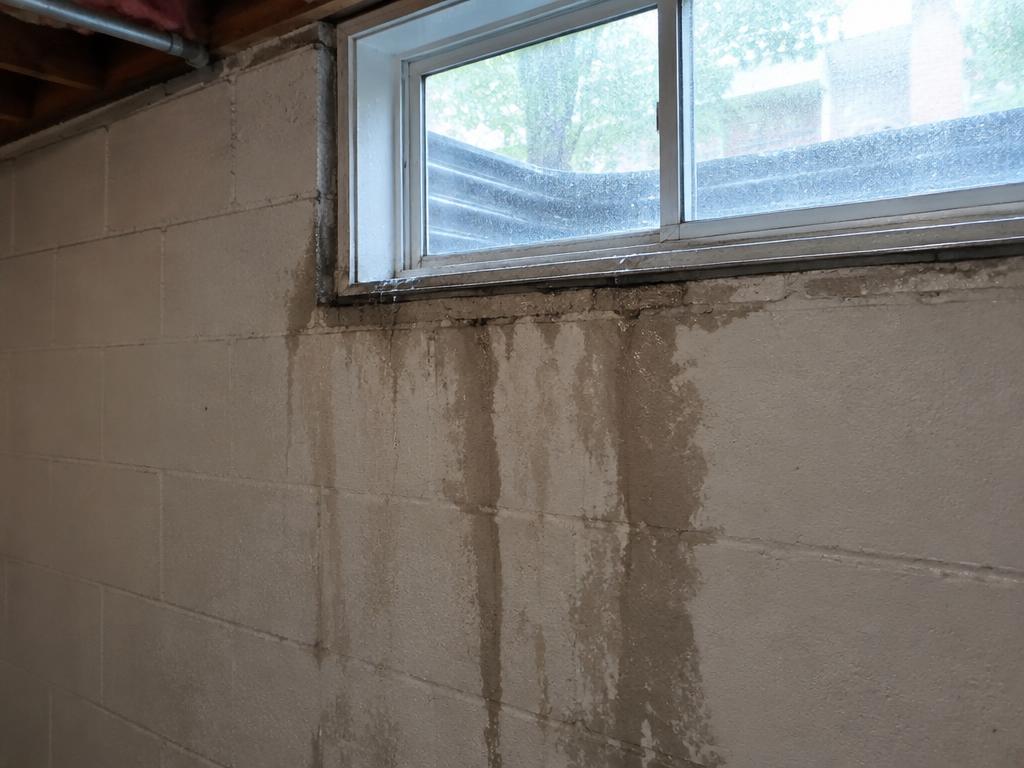
When water seeps into the basement through wall or floor cracks, that moisture intrusion can cause serious flooding. We understand all types of basements and how leaks are caused, which lets us match the right crack repair to each leak.
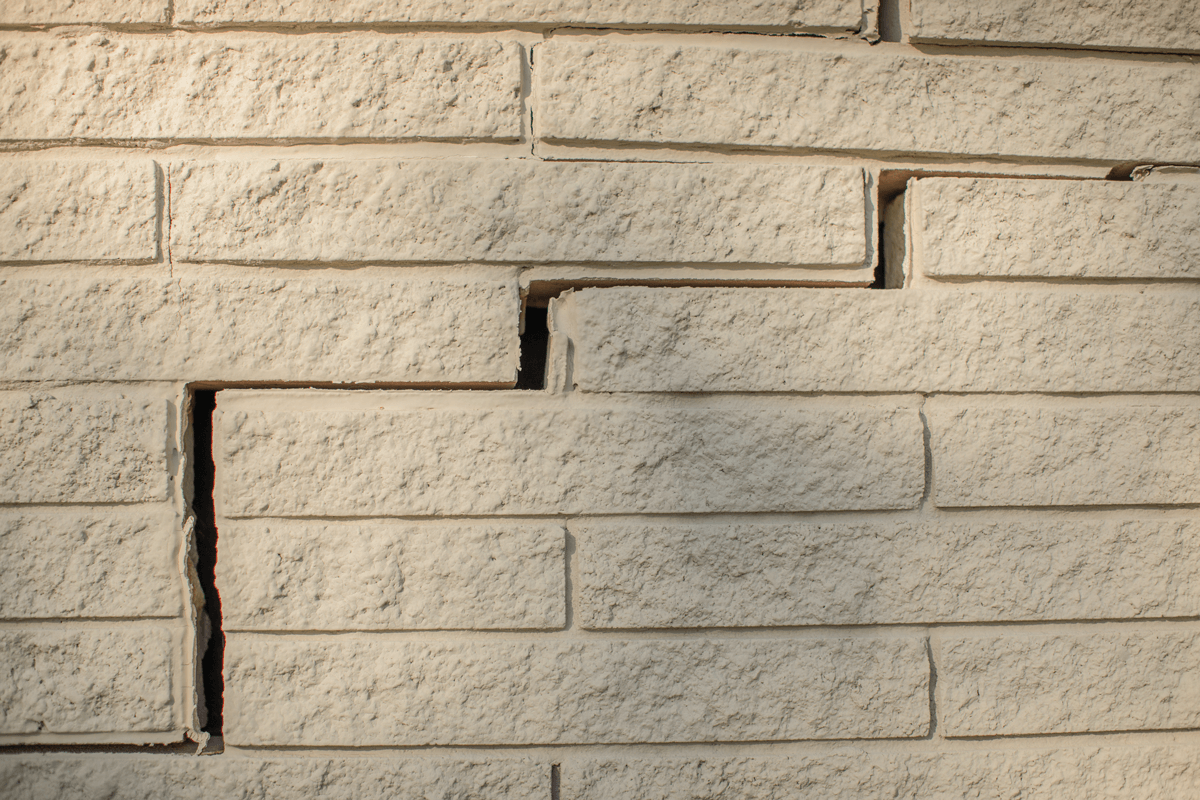
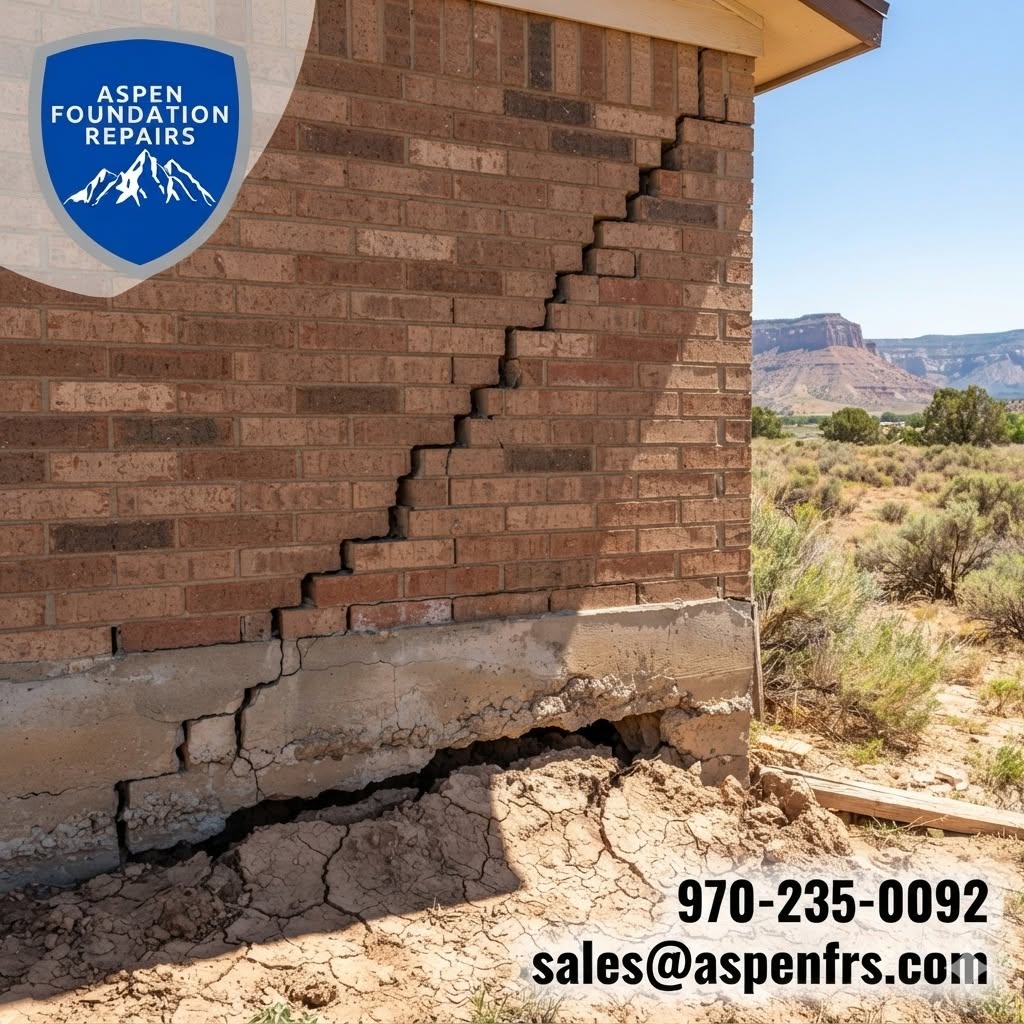
- Vertical, horizontal, or stair-step wall cracks
- A cracked concrete slab or basement floor
- Musty smells and persistent dampness
- Water leaks or seepage after rain or snowmelt
- Efflorescence — white, chalky mineral stains
- A high level of radon detected in the home
Key takeaways
- Leaking wall and floor cracks are sealed through the full thickness of the concrete, not just the face.
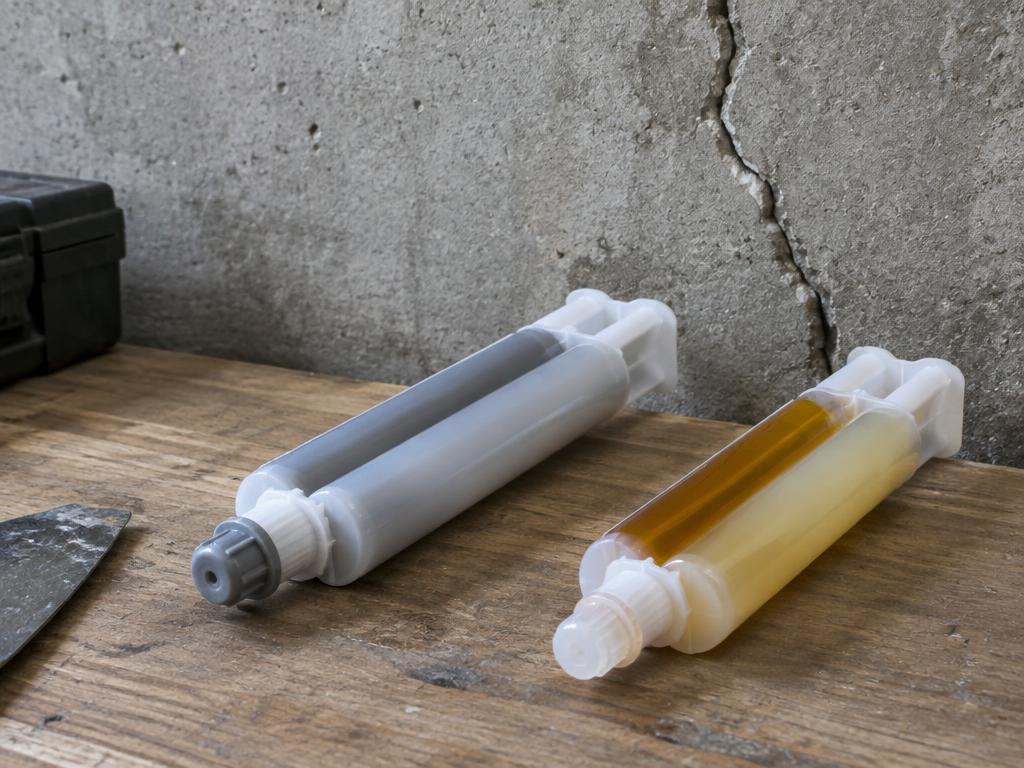
- Polyurethane flexes with the wall for active leaks; epoxy restores structural bond in poured walls.
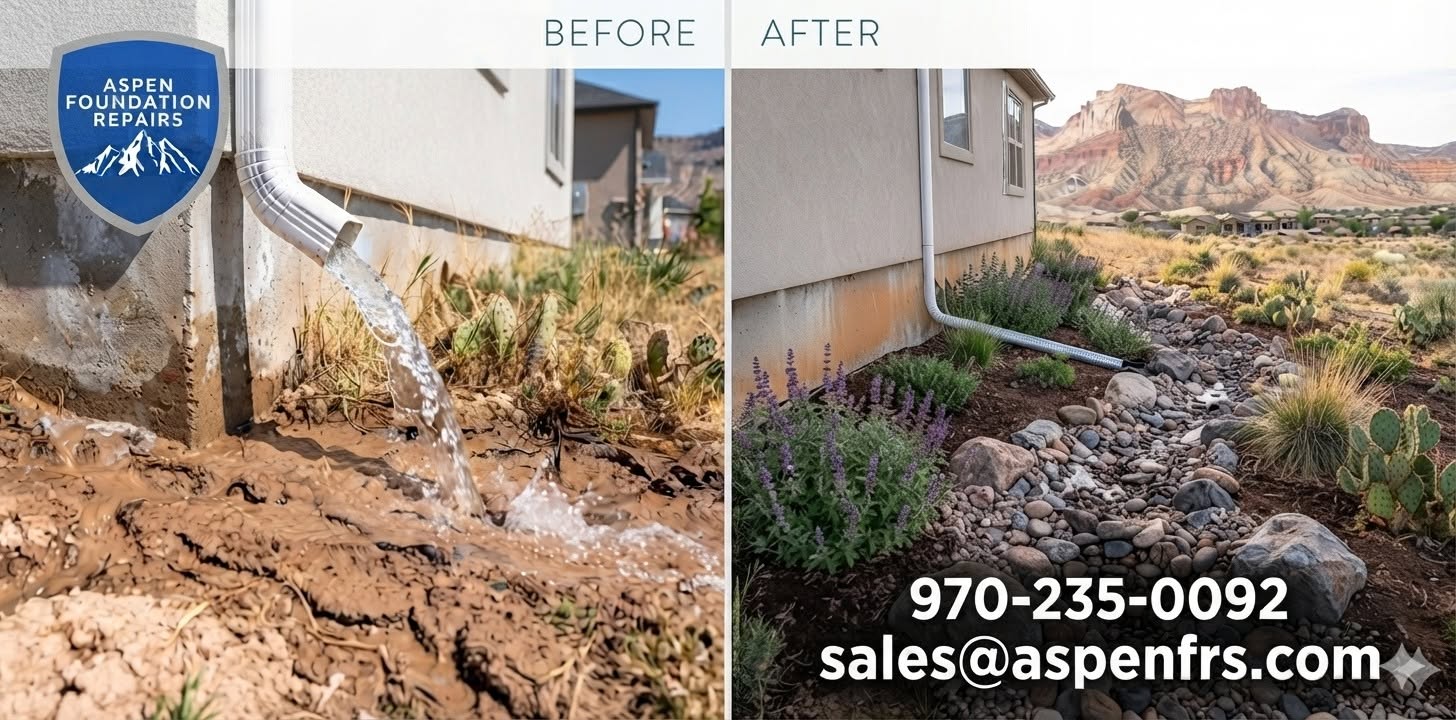
- Drainage comes first — relieve the water, then seal the crack so it is not fed again.
- Crack repair is not a warrantied service, because soil movement can reopen any sealed crack.
How we stop leaking floor cracks
Water can seep into a basement right through the porous concrete slab, and a floor crack makes it far worse. We start by installing a perimeter drainage system, then add a direct drainage channel so water entering the crack is routed to the drain or sump pump.
Finally we backfill the crack with stone and cover it with fresh concrete, so the repair is permanent instead of a surface patch that water simply works around.
Ready to put your home back on solid ground?
Free on-site inspection, written fixed price, and warrantied work by our own crews.
How we seal leaking wall cracks
The soil around your foundation holds water, and even the smallest crack lets that groundwater seep through the wall. As with floor cracks, the first step is a drainage system to relieve the water.
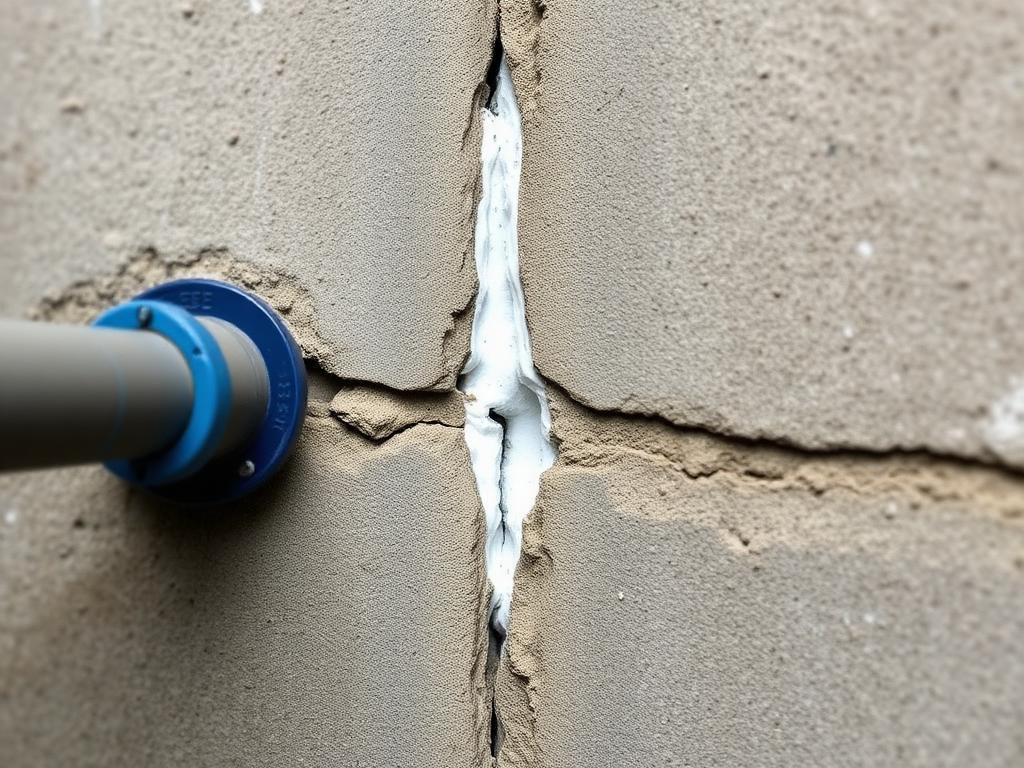
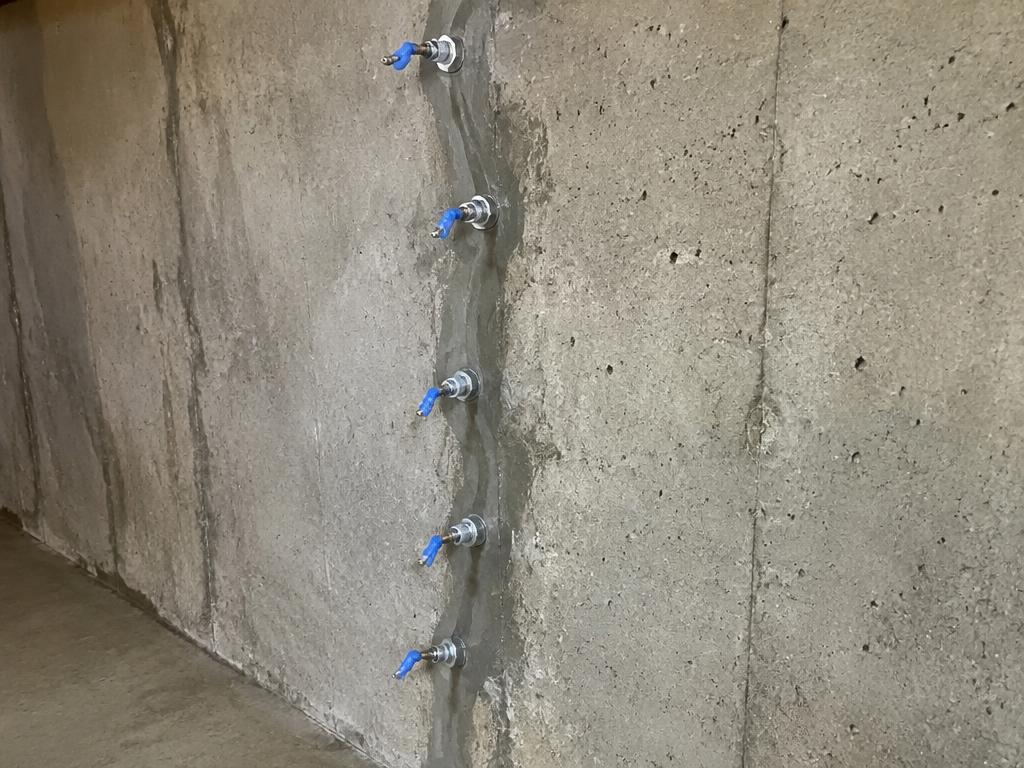
We then seal the crack with FlexiSpan®, an innovative polyurethane sealant that never dries out or cracks. Because it flexes with the natural movement of the foundation wall, the waterproof seal holds season after season.
Leaky basement windows
Window frames break down over time, creating separation that lets water past the seals. We start with a drainage system that funnels water to the sump pump, then create a small port in the wall beneath the window with a plastic fitting that directs any water into that drainage system.
The opening is sealed with a polymer injection for a clean, waterproof finish.
Ready to put your home back on solid ground?
Free on-site inspection, written fixed price, and warrantied work by our own crews.
When injection is the right fix
Injection works on poured concrete walls with non-structural or stabilized cracks. If the wall is still moving, we stabilize it first — sealing a crack in a wall that continues to shift only buys a season.
- Vertical or diagonal cracks that leak during snowmelt
- Damp streaks and efflorescence below a crack
- Cracks in block walls letting water through joints
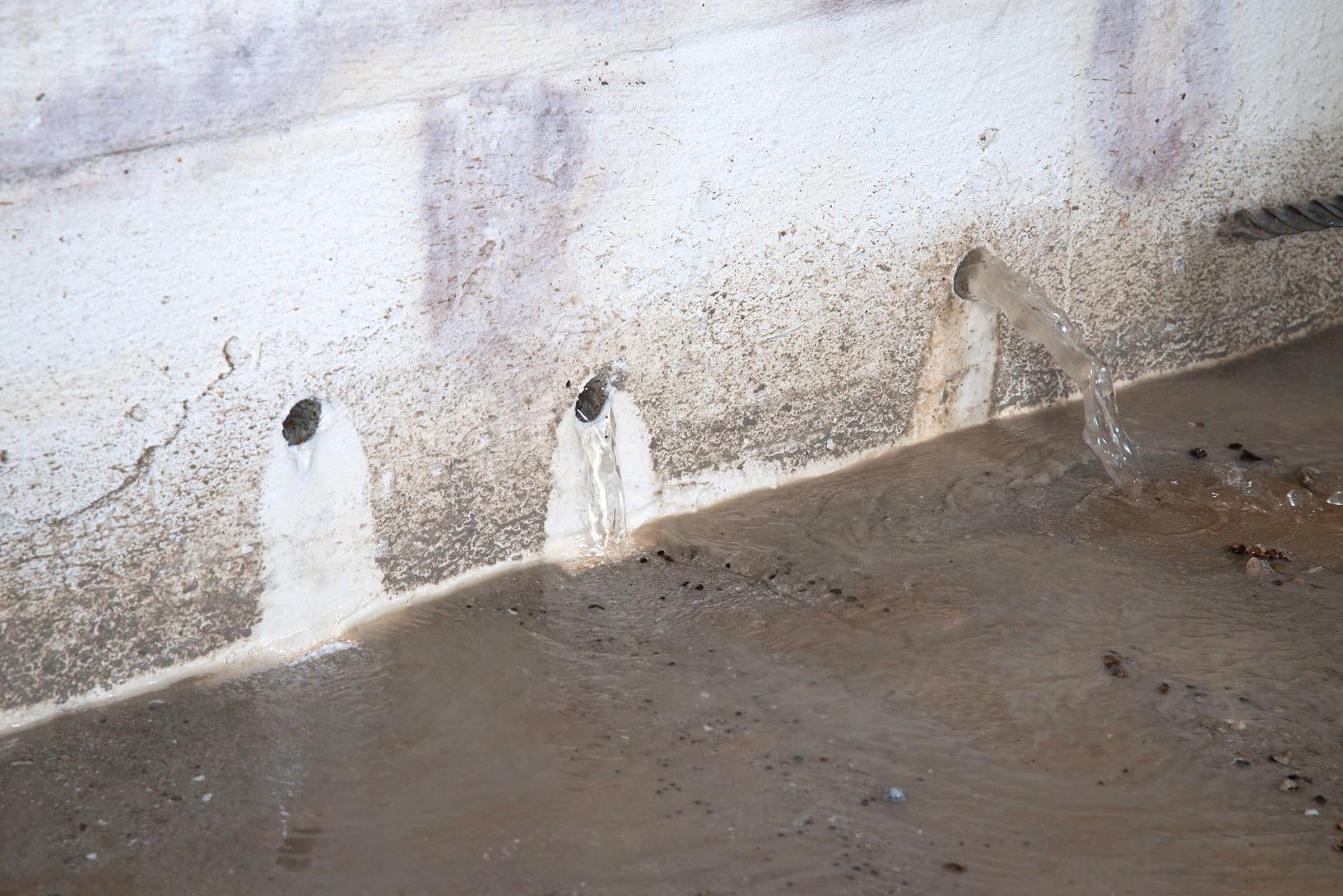
- Cold joints and tie-rod holes seeping water
Epoxy vs. polyurethane
- Polyurethane: flexible, expands to chase active leaks
- Epoxy: rigid, restores structural bond in poured walls
- Polyurethane for cold joints and tie-rod holes
- Epoxy where the crack must not move again
- Both fill the full wall thickness, not just the face
- Both can be painted or finished over
Ready to put your home back on solid ground?
Free on-site inspection, written fixed price, and warrantied work by our own crews.
Why cracks leak here
Across Rifle, Glenwood Springs, Carbondale, Grand Junction, Aspen, Basalt and Vail, spring snowmelt saturates backfill fast and pushes water against basement walls under real hydrostatic pressure. A hairline crack that stays dry in July can run water in April.
Freeze-thaw cycling widens those cracks a little each year, so sealing early is far cheaper than waiting for the wall to start moving.