
The heavy weight of masonry
Chimneys are incredibly heavy — a standard masonry chimney can weigh several tons. In proper construction, this massive structure should rest on its own dedicated, reinforced concrete footing, separate from the main house foundation.
However, settling occurs over time, and in some older Western Slope homes the chimney may not have been footed correctly in the first place. When a heavy chimney begins to lean or settle independently of the main house, it puts immense stress on the point where it connects to your home's framing and foundation walls.
Key takeaways
- A masonry chimney weighs several tons and should sit on its own reinforced footing
- Water absorbed into brick and mortar freezes, expands, and breaks the structure down
- Frost heave lifts the soil — and the chimney footing — every freeze-thaw cycle
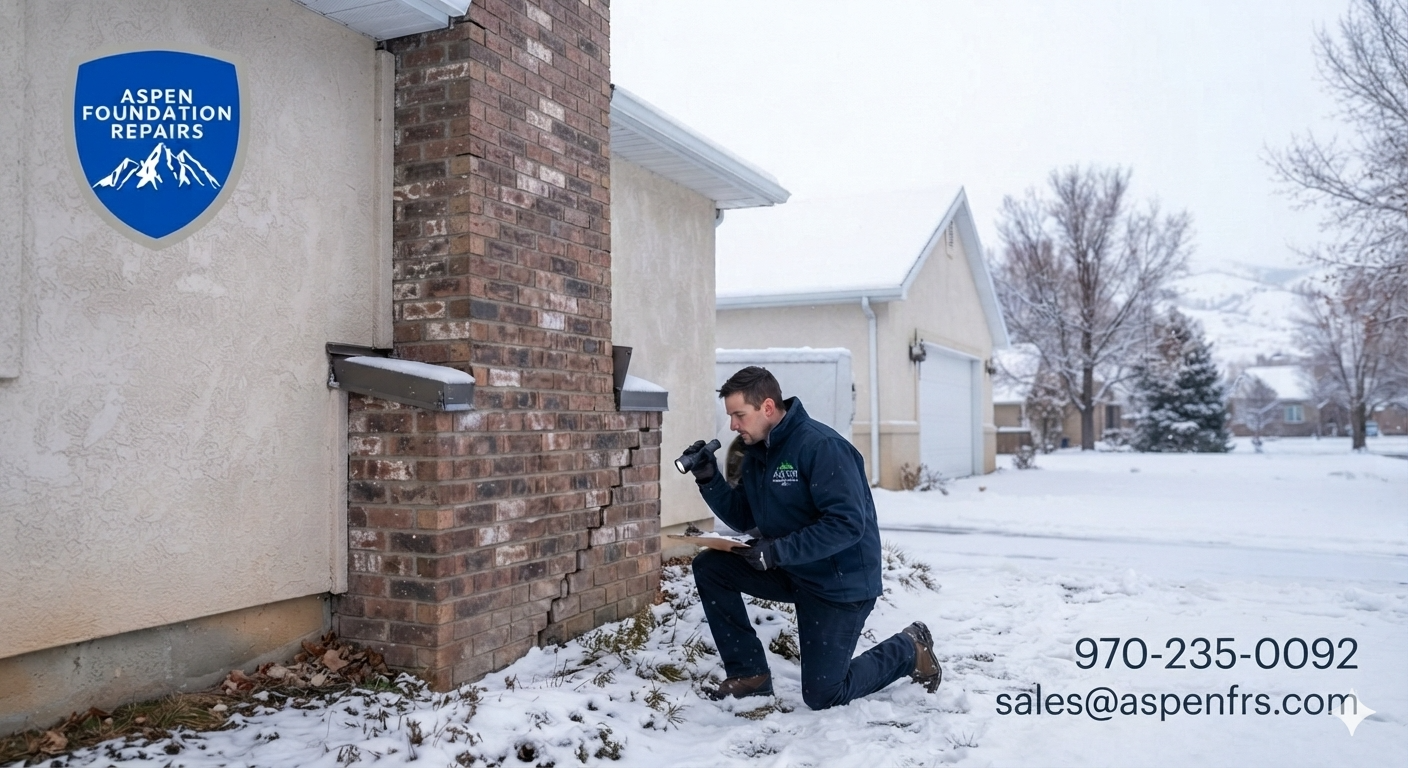
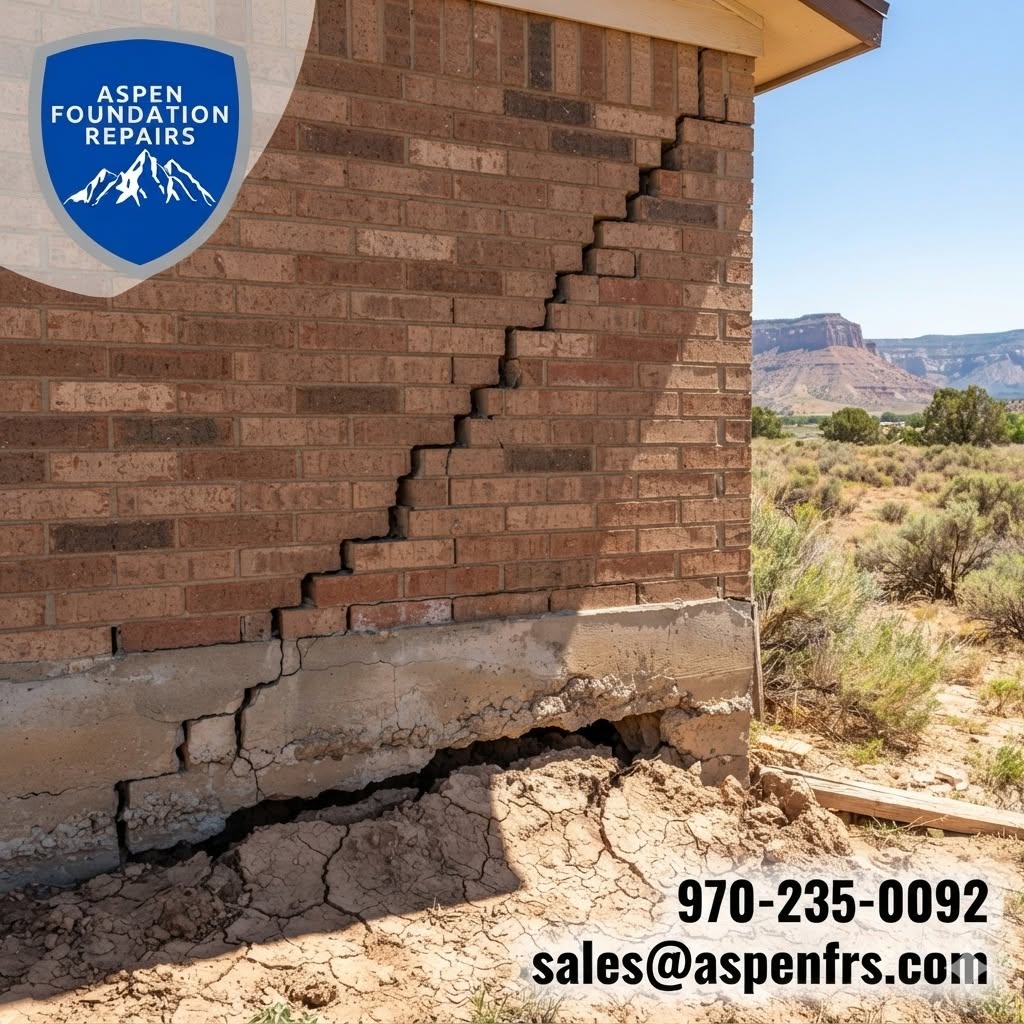
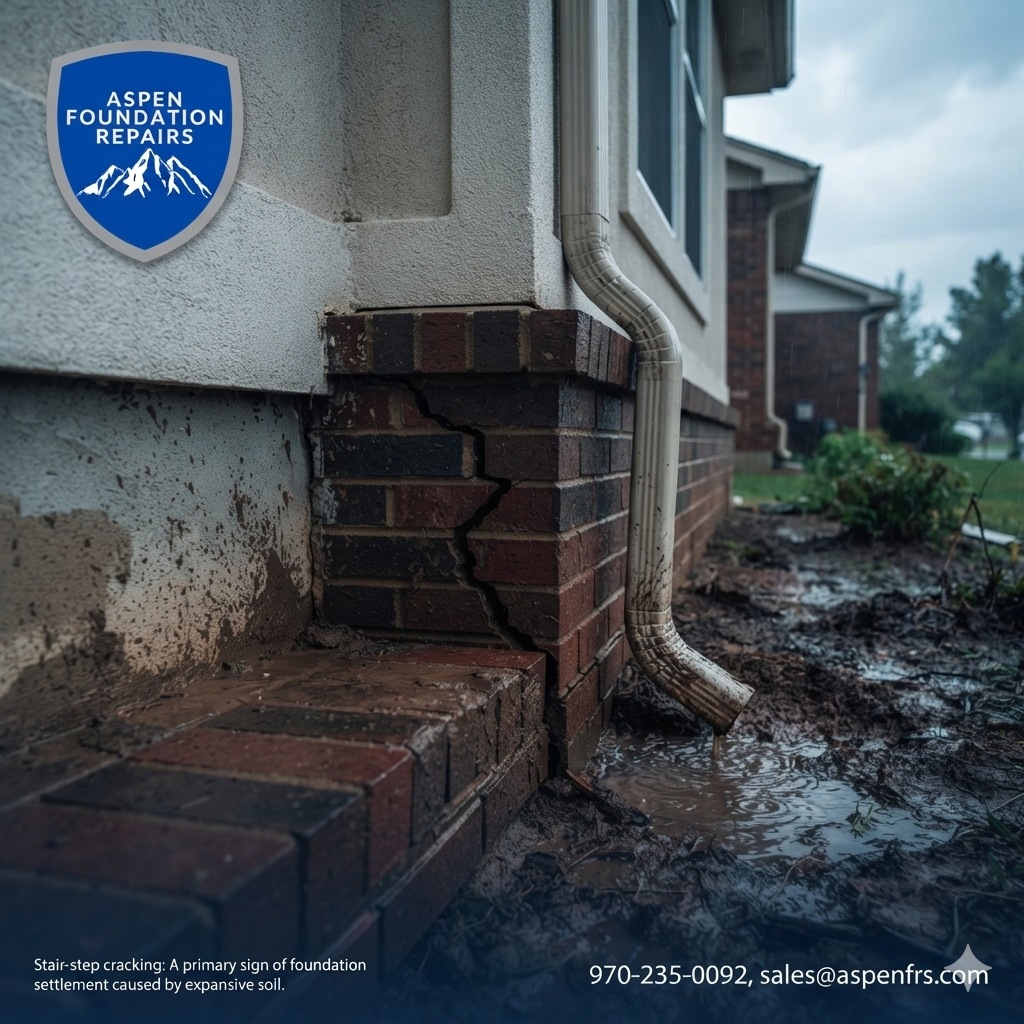
- Stair-step cracks at the chimney base and gaps where it meets the siding are red flags
The freeze-thaw cycle: your foundation's worst enemy
In the Western Slope and Roaring Fork Valley we experience dramatic temperature swings — sunny days above freezing, nights that plunge well below zero. That is where the trouble begins.
Masonry is porous. Even with a good crown and flashing, water from melting snow and ice penetrates brick, stone, and mortar. When temperatures drop, that absorbed water freezes and expands — causing spalling on the surface and cracking deep in the mortar joints. At the same time, soil moisture around your home turns to ice and the ground heaves upward, exerting massive pressure on foundation walls and the chimney's footing.
When the soil freezes and thaws, it moves. When the chimney expands and contracts with water absorption and temperature changes, it pulls and pushes on the house. This relentless movement is what leads to cracks in your foundation, walls, and chimney base.
Ready to put your home back on solid ground?
Free on-site inspection, written fixed price, and warrantied work by our own crews.
Warning signs to watch for this winter
You don't have to be a structural engineer to spot the early signs of chimney-related foundation distress. As you prepare for winter, inspect these areas:
- Stair-step cracks in the exterior brick — diagonal cracks in the mortar signal settling or pulling away
- Separation from the siding — a gap or torn caulking where the chimney meets the house
- Cracks in interior walls — vertical or diagonal drywall cracks near the chimney breast, ceiling, or corners
- Gaps in the firebox — separations between the firebrick and surrounding masonry
- Sticking doors or windows — chimney movement can twist the framing nearby
Protect your Western Slope home
Foundation issues caused by chimneys rarely get better on their own; they almost always worsen with each passing winter. Ignoring these signs can lead to costly structural repairs down the road — and the continued freeze-thaw cycle will only exacerbate the problem, so don't wait for the spring thaw.
At Aspen Foundation Repairs LLC, we specialize in diagnosing and stabilizing foundation problems unique to our mountainous terrain. Whether you are in Rifle, Carbondale, Aspen, or anywhere in the Western Slope and Roaring Fork Valley, we provide expert inspections and durable solutions — including helical piers and stabilization systems — to secure your home's foundation.