
Protecting your foundation starts with proper drainage
When winter arrives in Western Colorado, homeowners face more than freezing temperatures and snow-covered driveways. Seasonal snowmelt, fluctuating temperatures, frozen ground, and poor drainage can all contribute to foundation problems if water is not properly managed around the home.
At Aspen Foundation Repairs, we understand the challenges Western Colorado and Roaring Fork Valley homeowners face when it comes to protecting their foundations. From heavy spring runoff to winter freeze-thaw cycles, proper drainage is one of the most important steps you can take to help protect your home's structural integrity.
One effective solution is a properly designed French drain system, combined with a comprehensive drainage mitigation plan tailored to your property's needs.
Key takeaways
- Winter snowmelt and freeze-thaw cycles push water against foundation walls when drainage is poor
- A French drain collects groundwater and redirects it away from your foundation
- The best protection combines French drains with grading, downspout extensions, and surface drainage
- Fall is the ideal time to fix drainage — but active water problems should be evaluated right away, even in winter
1. Freeze-thaw cycles
Water in the soil can freeze and expand when temperatures drop. As temperatures rise, that ice melts, potentially changing soil conditions and contributing to movement around your foundation.
Repeated freeze-thaw cycles can place additional stress on foundation walls and surrounding soils, particularly where drainage is inadequate.
Ready to put your home back on solid ground?
Free on-site inspection, written fixed price, and warrantied work by our own crews.
2. Expanding soil and hydrostatic pressure
Some soils retain significant amounts of moisture. When water builds up around foundation walls, it can increase hydrostatic pressure against the concrete.
Depending on soil conditions and the foundation's construction, this pressure may contribute to cracking, water intrusion, or inward movement of foundation walls.
In colder weather, frost-related soil movement can add another layer of stress.
3. Snowmelt and winter runoff
Snow accumulating near your home may seem harmless, but melting snow can send substantial amounts of water toward your foundation.
If gutters are clogged, downspouts discharge too close to the house, or the ground slopes toward the structure, water can collect where you least want it.
Even when the ground is partially frozen, water from melting snow can travel across the surface and enter vulnerable areas around your foundation.
The bottom line: managing water around your home is essential year-round, especially when Western Colorado's winter conditions create repeated freezing and thawing.
Ready to put your home back on solid ground?
Free on-site inspection, written fixed price, and warrantied work by our own crews.
What is a French drain?
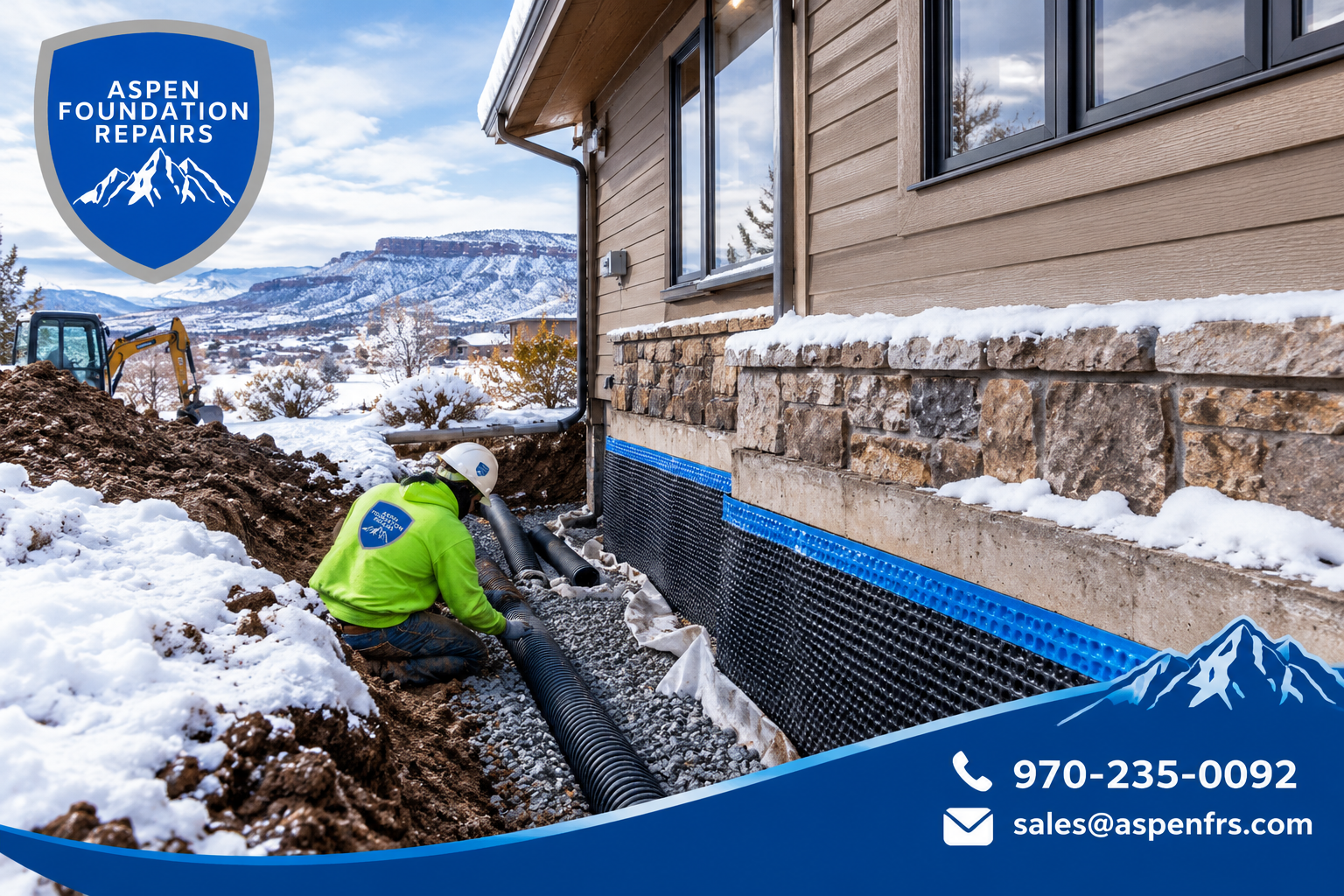
A French drain is a drainage system designed to collect and redirect excess groundwater away from areas where it can cause problems.
A typical system consists of a gravel-filled trench, a perforated drainage pipe, and filter fabric or other appropriate filtration materials to help limit soil intrusion. When properly designed and installed, the system allows water to enter the drainage assembly and flow toward a suitable discharge point.
French drains may be installed around portions of a foundation, along hillsides, or in areas where groundwater collects.
How can a French drain help protect your foundation?
A properly designed French drain can help:
- Reduce groundwater accumulation near foundation walls
- Relieve water buildup in problem areas when the system is designed for that purpose
- Redirect water away from vulnerable portions of your property
- Reduce the likelihood of water entering basements or crawl spaces
- Complement other drainage improvements, such as grading corrections and downspout extensions
Ready to put your home back on solid ground?
Free on-site inspection, written fixed price, and warrantied work by our own crews.
Why drainage mitigation matters in Western Colorado
However, every property is different. Soil composition, groundwater conditions, slope, foundation depth, and the location of a suitable discharge point all influence whether a French drain is the right solution.
A drainage system must also be designed to avoid directing water onto neighboring properties or creating new drainage problems elsewhere.
Drainage mitigation involves identifying where water originates, understanding how it moves across and beneath your property, and implementing solutions to control its impact.
In Western Colorado and Roaring Fork Valley communities, terrain and soil conditions can vary significantly from one property to another. A home built on a slope may experience runoff from uphill areas. Another property may have poorly draining soil or low spots that allow water to collect near foundation walls.
Because these conditions differ, an effective drainage solution starts with identifying the actual source of the water.
Common drainage solutions
Depending on your property's conditions, a drainage mitigation plan may include several improvements.
- French drain installation — intercepts groundwater and moves it away from vulnerable areas when properly designed for the site
- Surface drainage improvements — channel drains, catch basins, and other systems collect water that pools in driveways, yards, and low-lying areas
- Proper grading — ground around a foundation should generally slope away from the structure so rainwater and snowmelt do not collect against foundation walls
- Gutter and downspout management — keep gutters clear and extend downspouts away from the foundation to prevent unnecessary water accumulation
- Foundation waterproofing and drainage — exterior waterproofing, foundation drainage, or other targeted measures where water intrusion is occurring
Ready to put your home back on solid ground?
Free on-site inspection, written fixed price, and warrantied work by our own crews.
Should you install a French drain before winter?
Planning ahead can make a significant difference in foundation protection.
Fall is often a good time to evaluate drainage concerns before persistent freezing temperatures and winter precipitation arrive. Addressing accessible drainage issues early may help reduce water accumulation during the colder months.
However, not every drainage project should be attempted in winter. Frozen soil, snow cover, limited excavation access, and low temperatures can make installation more difficult. Some materials and construction methods also have temperature limitations.
If you already have water entering your basement or crawl space, visible foundation movement, or significant drainage problems, it is worth having the situation evaluated rather than waiting for spring.
An assessment can help determine whether immediate measures are appropriate and whether more extensive work should be scheduled for suitable conditions.
Warning signs your foundation may have a drainage problem
Foundation and drainage issues are easier to address when the underlying cause is identified early. Keep an eye out for these warning signs:
- Water collecting near the foundation after rain or snowmelt
- Damp basement walls or persistent moisture in a crawl space
- White, chalky deposits on concrete or masonry
- Musty odors that may indicate ongoing moisture
- New or widening cracks in foundation walls
- Doors or windows that suddenly become difficult to open or close
- Soil erosion or recurring standing water near the house
- Downspouts discharging water close to foundation walls
Ready to put your home back on solid ground?
Free on-site inspection, written fixed price, and warrantied work by our own crews.
When to seek professional attention
These symptoms do not automatically mean your foundation has serious structural damage. Some may be related to normal material movement, plumbing leaks, or other issues.
However, recurring moisture, new cracks, and noticeable changes in foundation walls deserve professional attention.
If a foundation wall is bowing, shifting, or developing rapidly widening cracks, seek a prompt professional evaluation.
Protecting your foundation starts with the right plan
There is no universal drainage solution for every home in Western Colorado.
A French drain may be an excellent option for one property, while another may benefit more from improved grading, better roof runoff management, surface drainage, or foundation waterproofing.
The key is understanding how water interacts with your property before choosing a solution.
At Aspen Foundation Repairs, we recognize that your home's foundation is one of its most important structural components. Taking drainage concerns seriously can help homeowners make informed decisions about protecting their property through changing seasons.
Whether you are preparing for winter, dealing with recurring water intrusion, or concerned about the effects of snowmelt and freeze-thaw cycles, addressing drainage problems is an important step toward long-term foundation protection.
Ready to put your home back on solid ground?
Free on-site inspection, written fixed price, and warrantied work by our own crews.
Schedule your foundation and drainage evaluation
Don't let poor drainage become a bigger problem for your home.
If you have noticed standing water near your foundation, basement moisture, recurring runoff issues, or signs of foundation movement, consider having the area evaluated to determine the cause and identify appropriate solutions.
Aspen Foundation Repairs is here to help Western Colorado homeowners understand their foundation concerns and explore practical options for drainage mitigation and foundation protection.
Contact us to discuss your property's drainage concerns and determine the next steps toward protecting your foundation through Western Colorado's changing seasons.